Showing posts with label opinion. Show all posts

Saturday, April 16, 2011

Ginger


I seriously love these. They are lightly sweet and quite tasty. And did you know just how good ginger is for you? You didn't? Well, let me help!

Benefits of ginger:
*ginger improves digestion
*ginger is a natural pain reliever
*ginger helps nausea. There are some women who swear it gets rid of morning sickness!
*ginger helps inflammation
*ginger eases heartburn
*ginger helps cold and flu for both prevention and treatment (think ginger ale).
*ginger helps ease menstrual cramps
*ginger helps kidney functions
*ginger helps improve circulation
*ginger helps arthritis (through reducing pain and inflammation already mentioned)
*ginger lowers cholesterol
*ginger has been said to help ovarian and colon cancer
*ginger is antibacterial and antifungal in nature so it is good for many things.

All in all, ginger chews aren't the best way to take ginger. A better idea is fresh ginger root used in cooking and baking, but if you are easing into it and want a tasty treat, ginger chews sure are great! (Oh, and you can find them at Big Hollow for only $2.25 a bag).

Monday, January 17, 2011

The Microwave

 
First, let me just state that opinions (and studies) vary widely. There is enough information on the internet to confuse anyone looking into the issue. You can find repeated proof that the microwave is dangerous for you. And you can find study upon study that says that there is absolutely no danger in using one. I honestly don't expect to persuade anyone and I do not want to cause a fight, but I will state my top reasons for choosing not to use a microwave. 

Second, before I actually state my reasons, let's talk about how microwaves work, shall we?
 
How Your Microwave Actually Heats Your Food:
Microwaves are a form of electromagnetic radiation—waves of electrical and magnetic energy moving together through space. EM radiation ranges from very high energy (gamma rays and x-rays) on one end of the spectrum to very low energy (radio waves) on the other end of the spectrum.
Microwaves are on the low energy end of the spectrum, second only to radio waves. They have a wavelength of about 4.8 inches—about the width of your head.
Microwaves are generated by something called a magnetron (a term derived from the words “magnet” and “electron”), which is also what enabled airborne radar use during WWII. Hence the early name for microwave ovens: radar ranges.
A magnetron is a tube in which electrons are subjected to both magnetic and electrical fields, producing an electromagnetic field with a microwave frequency of about 2,450 megaHertz (MHz), which is 2.4 gigaHertz (GHz).
Microwaves cause dielectric heating. They bounce around the inside of your oven and are absorbed by the food you put in it. Since water molecules are bipolar, having a positive end and negative end, they rotate rapidly in the alternating electric field. The water molecules in the food vibrate violently at extremely high frequencies—like millions of times per second—creating molecular friction, which heats up the food.
If the food or object place in the microwave had no water it would not be able to have this resonance heating type effect and would remain cool.
Structures of the water molecules are torn apart and forcefully deformed. This is different from conventional heating of food, whereby heat is transferred convectionally from the outside, inward. Microwave cooking begins within the molecules where water is present.
Contrary to popular belief, microwaved foods don’t cook “from the inside out.” When thicker foods are cooked, microwaves heat the outer layers, and the inner layers are cooked mostly by the conduction of heat from the hot outer layers, inward.
Since not all areas contain the same amount of water, the heating is uneven.
Additionally, microwaving creates new compounds that are not found in humans or in nature, called radiolytic compounds. We don’t yet know what these compounds are doing to your body.
In addition to the violent frictional heat effects, called thermic effects, there are also athermic effects, which are poorly understood because they are not as easily measured. It is these athermic effects that are suspected to be responsible for much of the deformation and degradation of cells and molecules. [13]


My Reasons for NOT Using the Microwave:
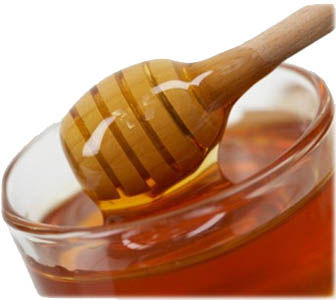
*Questionable: Moms (and nurses and leche legue leaders) out there will tell you NOT to microwave breast milk. Why? Because it destroys the nutrients, kills essential amino acids and negates B12. If it can that to breast milk, why would it not effect other food? It has also been shown to kill the good microbacterial spores in honey (you know, the stuff that makes honey so good for you?).


*Although I use very little plastic, it is an argument out there: Carcinogenic toxins could be leached from plastic or paper plates or covers and mix with your food. See my post on BPA.

found that broccoli nuked in the microwave with a little water lost up to 97 percent of the beneficial antioxidant chemicals it contains. By comparison, steamed broccoli lost 11 percent or fewer of its antioxidants. (Again, just another one of those studies that you can disregard if you are inclined).

*Perhaps the most concrete evidence of the dangers of microwaves comes from Dr. Hans Hertel, a Swiss food scientist, who carried out a small but high-quality study on the effects of microwaved food on humans. His conclusions were clear and alarming: microwave cooking significantly altered the food‘s nutrients enough so that changes occurred in the particpants‘ blood--changes that suggested deterioration. The changes included:
  • Increased cholesterol levels
  • More leukocytes, or white blood cells, which can suggest poisoning
  • Decreased numbers of red blood cells
  • Production of radiolytic compounds (compounds unknown in nature)
  • Decreased hemoglobin levels, which could indicate anemic tendencies 
Whether this is correllation or causeation, again I am not here to prove, I am just stating why I don't use the microwave.


*Microwaves are used in the field of gene altering technology to weaken cell membranes. Scientists use microwaves to actually break cells apart. Impaired cells then become easy prey for viruses, fungi and other microorganisms.

*Some "studies" have found that the microwaves actually turn molecules into carcinogens (aka cancerous).

*In the end, I would just rather be safe than sorry. We honestly don't know what microwaves do. And it really isn't that inconvenient to reheat my food using the stove or oven. I actually find myself eating more fruits and vegetables for lunch at work because I don't have the "reheating leftovers" option. Win-win if you ask me.

Other "studies" you can learn more about:
  • A 1999 Scandinavian study of the cooking of asparagus spears found that microwaving caused a reduction in vitamin C[6] .
  • In a study of garlic, as little as 60 seconds of microwave heating was enough to inactivate its allinase, garlic’s principle active ingredient against cancer[7] .
  • A Japanese study by Watanabe showed that just 6 minutes of microwave heating turned 30-40 percent of the B12 in milk into an inert (dead) form[8] . This study has been cited by Dr. Andrew Weil as evidence supporting his concerns about the effects of microwaving. Dr. Weil wrote:
  • A recent Australian study[9] showed that microwaves cause a higher degree of “protein unfolding” than conventional heating.
  • Microwaving can destroy the essential disease-fighting agents in breast milk that offer protection for your baby. In 1992, Quan found that microwaved breast milk lost lysozyme activity, antibodies, and fostered the growth of more potentially pathogenic bacteria[10] .

Monday, December 13, 2010

Christmas Gift Ideas

Here are some non-conventional ideas for natural, useful Christmas gifts.

$50-$100
 Young Living ART kit. LOVE. IT. Around the same price as Mary Kay, but way better for your skin. Shown in the picture are the foaming cleanser, toner, night and day moisturizer.

$20-$40
 OK, I don't work for Young Living, but I love their products. Their oils have no added alcohol like most other essential oils and because of that, they are more expensive, but you get more bang for your buck. It only takes 1 or 2 drops to get the benefits. Some of my favorites include Thieves, Melaleuca, Lavender and Juva Cleanse.


$10-$20

This tooth powder is great and even though it looks questionable, it tastes great too. It is 100% organic, made from herbs and is actually made locally (in Wyoming). Can't beat that! Come on, we always got tooth brushes and tooth paste in our stockings growing up.


$1-$10


This soap is affordable and wonderful. It is also locally made and can be found at Big Hollow.

Saturday, December 11, 2010

This is not my work, but everyone needs to read it

This Surprising Toxin Can Lead to Genetic Defects and Miscarriages…

Posted By Dr. Mercola | December 11 2010 | 15,329 views


bpa in baby bottlesAlthough more than 200 research studies show that bisphenol A (BPA) is harmful to human health, the U.S. government has decided that it would rather side with the chemical industry than with children.
The Senate failed to vote on the passage of a bill that would have resulted in a ban on the use of BPA in baby bottles and sippy cups.
And in fact, the ban is no longer even in consideration. According to the Wall Street Journal:
"Sen. Dianne Feinstein (D., Calif.) was the primary backer of a controversial amendment banning the chemical bisphenol A, or BPA, which has been linked to some cancers, in baby bottles and sippy cups.

On Wednesday, she withdrew the amendment from consideration."
Feinstein says she'll keep fighting to make the ban a reality.

Sources:


Dr. Mercola's Comments:

Sen. Dianne Feinstein's (D-Calif.) amendment to the latest food-safety bill would have banned the use of the toxic chemical bisphenol-A (BPA) from baby bottles and sippy cups, required the FDA to finalize their safety assessment of the chemical by December 2012, and allowed states to ban the chemical entirely if they so choose.
Unfortunately, thanks to heavy pressure from the chemical industry, the amendment has been withdrawn from consideration.

U.S. Babies and Children at Risk From BPA

That BPA should be taken out of all products intended for children is a no-brainer.
Of 115 published animal studies, 81 percent found significant effects from even low-level exposure to BPA. This toxic chemical, an endocrine disrupter, first caught researchers' attention after normal mice began to display uncommon genetic abnormalities.
The defects were linked to plastic cages and water bottles that had been cleaned with a harsh detergent, causing BPA to leach out of the plastic.
After determining how much BPA the mice had been exposed to, the researchers realized even an extremely small dose of 20 parts per billion daily, for just five to seven days, was enough to produce effects.
Some of the greatest concern surrounds early-life exposure to BPA, which can lead to chromosomal errors in the developing fetus, triggering spontaneous miscarriages and genetic damage. And being exposed to just 0.23 parts per billion of BPA is enough to disrupt the effect of estrogen in a baby's developing brain.
For this reason, women of childbearing age and those who are pregnant, along with infants and children, should be especially diligent at avoiding BPA.

BPA in Baby Bottles Already Banned in Canada, Why Not the U.S.?

BPA in baby bottles has already been banned in Canada and several U.S. states. Other measures are being considered in 30 U.S. states and municipalities -- but at a federal level, the government is treading water and choosing to protect the interests of the chemical industry in favor of public health.
The American Chemistry Council, a lobby group for the chemical industry that issued a statement in early 2010 denying the health hazards of BPA, clearly does not want to see this cash cow bite the dust ... nor be held accountable for health problems related to its use. They will pull out all the stops to keep this chemical in your food packaging, baby bottles, and more for as long as possible.
Despite all the research showing serious health effects at low-level exposure, the U.S. FDA has virtually no power to do anything about it because BPA was classified in 1963 as an indirect food additive and is listed among the 3,000 or so chemicals categorized as GRAS ("generally regarded as safe").
This outdated GRAS designation is what exempts BPA from more careful scrutiny and analysis.
According to the FDA's regulations, a substance granted GRAS status is not subject to FDA review. The Agency explains these limitations via an "update" on its website:
"Current BPA food contact uses were approved under food additive regulations issued more than 40 years ago. This regulatory structure limits the oversight and flexibility of the FDA.
Once a food additive is approved, any manufacturer of food or food packaging may use the food additive in accordance with the regulation. There is no requirement to notify the FDA of that use.
For example, today there exist hundreds of different formulations for BPA-containing epoxy linings, which have varying characteristics. As currently regulated, manufacturers are not required to disclose to FDA the existence or nature of these formulations.
Furthermore, if the FDA were to decide to revoke one or more approved uses, the FDA would need to undertake what could be a lengthy process of rulemaking to accomplish this goal."

Where is BPA Found?

In 2009, more than 6 billion pounds of BPA were made, representing nearly $7 billion in sales. It is one of the world's highest production-volume chemicals and is widely used in the production of:
  • Plastic water bottles
  • Plastic gallon milk bottles
  • Plastic microwavable plates, ovenware, and utensils
  • Baby toys, bottles, pacifiers, and sippy cups
  • Canned foods and soda cans (most have plastic lining in the cans)
  • Tooth sealants
The use of BPA is so pervasive that scientists have found that 95 percent of people tested have dangerous levels of BPA in their bodies.
Again, some of the biggest victims are your children, who may be exposed to the chemical while in utero, and are quite literally "fed" the chemical via plastic baby bottles, sippy cups and toys (which they often put in their mouths).
The cumulative effect of being exposed to minuscule amounts of BPA from cans, bottles, plates and all other sources over the years can eventually spell serious trouble for your health.
One recent study found the chemical can lead to heart disease, diabetes and liver problems in adults, and previous research has linked BPA to:
  • Structural damage to your brain
  • Hyperactivity, increased aggressiveness, and impaired learning
  • Increased fat formation and risk of obesity
  • Altered immune function
  • Early puberty, stimulation of mammary gland development, disrupted reproductive cycles, and ovarian dysfunction
  • Changes in gender-specific behavior, and abnormal sexual behavior
  • Stimulation of prostate cancer cells
  • Increased prostate size, and decreased sperm production
  • Diabetes
  • Heart disease
  • Liver damage

You Can Take Action, Even if the Federal Government Won't

There has been enough negative press about BPA that the public has been demanding safer, BPA-free alternatives. As a result, as of late summer 2010 BPA bills were pending in five state legislatures, and earlier this year numerous positive steps have been made to get this toxin out of U.S. food containers:
  • Vermont banned BPA in baby food, formula and bottles, and will restrict its use in metal food cans starting July 1, 2014
  • New York state banned BPA in bottles, sippy cups, pacifiers and drinking straws beginning December 2010
  • General Mills announced in April 2010 that it would use BPA-free cans for Muir Glen organic tomatoes starting with the next harvest
Certain manufacturers, including Philips Avent, Disney First Years, Gerber, Dr. Brown, Playtex and Evenflow, have also said they will stop making baby bottles that contain BPA, while several major retailers, including CVS, Kmart, Walmart, Toys R Us and Babies R Us are removing BPA-containing products from their stores.
So the good news is that there are plenty of resources available for you to find BPA-free alternatives for your family. Please support the companies that are removing this chemical from their products, and look for BPA-free labels on all baby bottles and children's toys you buy.
You can further reduce your family's exposure to this toxic chemical by following these 11 tips:
  1. Only use glass baby bottles and dishes for your baby.
  2. Get rid of your plastic dishes and cups, and replace them with glass alternatives.
  3. Give your baby natural fabric toys instead of plastic ones, and only BPA-free pacifiers and teethers.
  4. Store your food and beverages in glass -- NOT plastic -- containers. Glass is the safest and most inert way to store your water and food, and is far better than ANY plastic (even BPA-free varieties).
  5. IF you choose to use a microwave, don't microwave food in a plastic container.
  6. Use glass, ceramic, or stainless steel travel coffee mugs rather than plastic or Styrofoam coffee cups.
  7. Avoid using plastic wrap (and never microwave anything covered in it).
  8. If you opt to use plastic kitchenware, at least get rid of the older, scratched-up varieties, avoid putting them in the dishwasher, and don't wash them with harsh detergents, as these things can cause more BPA to leach into your food.
  9. Avoid using bottled water; filter your own using a high-quality filter instead.
  10. Before allowing a dental sealant to be applied to your, or your children's, teeth, ask your dentist to verify that it does not contain BPA.
  11. Avoid using canned foods (including soda cans) as the linings often contain BPA. If you do eat canned foods, choose only those that come in BPA-free cans.

Related Links:


Thursday, August 26, 2010

Before

Before I began running barefoot it was not uncommon for my feet to hurt, especially at the end of a long day. The arches ached the most, followed closely behind by the ball of my foot, just under my big toe. The pain was enough to make me question why my feet were hurting. I wear the right kinds of shoes to give enough support. Was it because I was on my feet all day? Or was it the stress of my job? I even went so far as to learn about reflexology and how every part of our body is connected to another part. I learned that the arches of my feet corresponded to my lower back. And sure enough, when my arches hurt, so did my lower back and vice verse. I learned that the area under my big toe corresponded to my thyroid. But I didn't know what to do with this information except rub my feet at night (or get my husband to do it :)

Since running barefoot, the skin on the bottoms of my feet have changed. They have taken on a smoother feel, and are thicker, but not callused. The only thing I can relate it to is leather. And I've noticed something else too. My arches don't hurt. Even after a long run they feel great. They are stronger now and bear the weight of my body with ease. And that big lump on the ball of my foot? It has flattened out and no longer hurts either.

Coincidence? Perhaps, but I don't think so.

I can't explain it, but running barefoot is more than just a natural way of moving, it is a healing experience. It is my way of connecting my body to mother earth. And it is a healing/spiritual reconnection event every time I run.